The Real Environmental Cost of Traditional Toilet Paper
Every day in Canada, millions of rolls of toilet paper are flushed away—most made from virgin wood pulp, harvested from forests near and far. The environmental toll of that daily habit rarely gets discussed in depth. The reality is straightforward: traditional toilet paper is directly linked to deforestation, energy-intensive manufacturing, high water consumption, and landfill waste. Each sheet you use is the product of an entire supply chain that often puts strain on natural ecosystems.
If you’re conscious about your environmental footprint, understanding these impacts is the only way to make real choices. What follows isn’t speculation or scare tactics, but a clear-eyed look at the steps between “tree” and “toilet paper”—and why the type of paper you choose matters.
What Actually Affects the Environmental Impact of Toilet Paper?
Raw Material Sourcing and Deforestation
Most mainstream toilet paper brands in Canada rely on virgin hardwood or softwood pulp. This pulp comes from boreal and other ancient forests, which are vital carbon sinks. The more forests are felled for paper, the more carbon is released (and less is stored in standing trees). These forests are slow to regenerate and are often clear-cut—meaning they're removed entirely, with lasting damage to habitat and climate.
Bamboo-based toilet paper is different. Bamboo can be harvested every year without replanting—no clear-cutting, no destroying old growth. Because bamboo regenerates so quickly, it’s often considered the only practical way to supply large-scale paper needs from a truly renewable resource.
Manufacturing and Processing Footprint
The conversion of wood into paper involves massive amounts of water, energy, and harsh chemicals (bleaching agents, for example). These processes create greenhouse gas emissions and, in some cases, toxic wastewater. Transportation also adds a sizeable footprint, especially when pulp or final products are shipped around the world for processing and packaging.
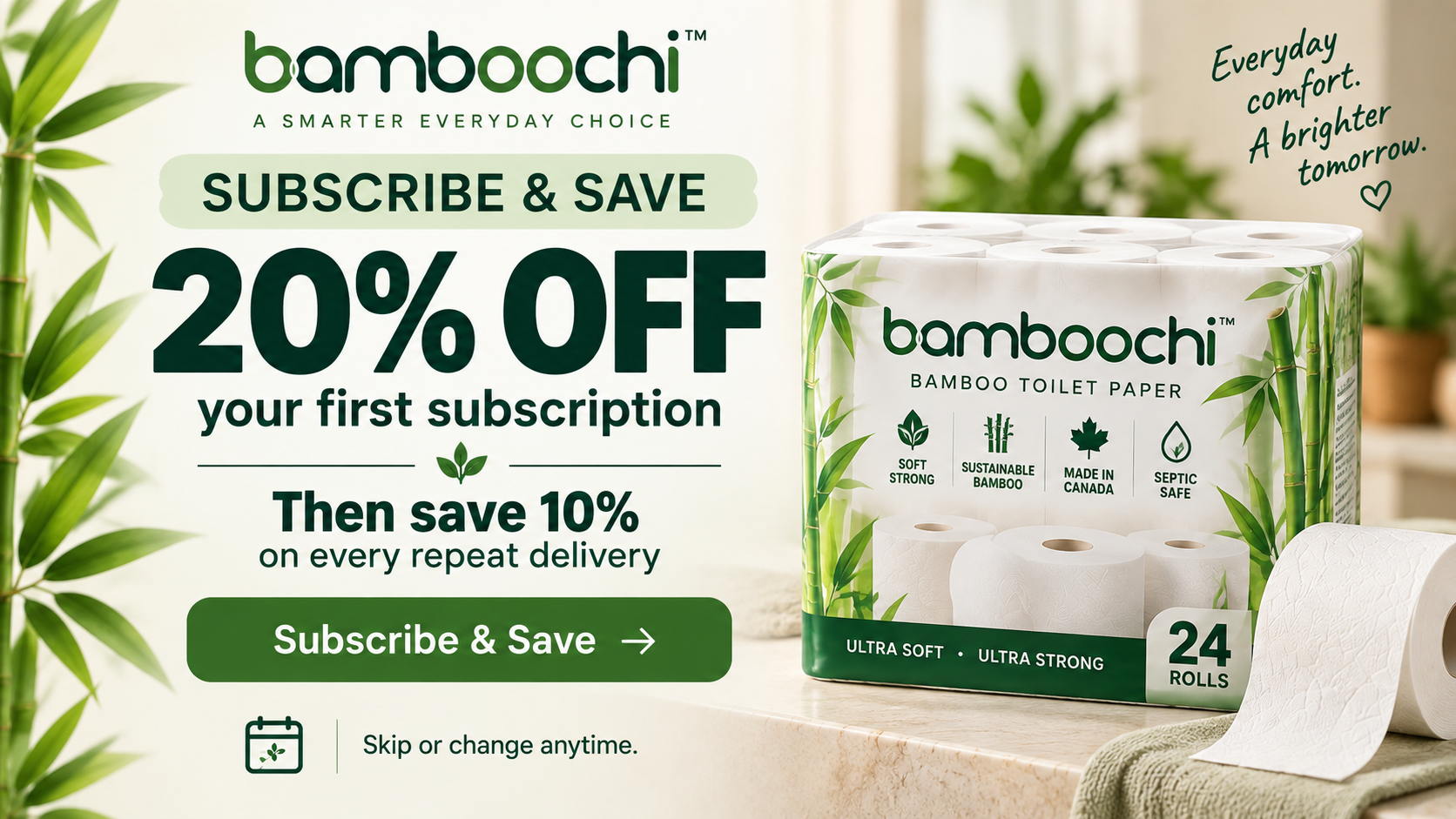
Manufacturing with bamboo uses less energy and water than traditional wood pulp. Processing facilities can also be closer to the source plant, which can reduce transport emissions—especially when choosing bamboo toilet paper made in Canada, like Bamboochi, instead of options shipped from overseas.
Waste, Decomposition and Afterlife
Conventional toilet paper contains shorter cellulose fibers, fillers, and sometimes chemical additives. While it’s built to break down in water, it decomposes slowly in landfill or low-oxygen environments. Wood-based paper, when not captured in wastewater systems, becomes part of Canada’s municipal landfill problem—eventually emitting methane as it breaks down.
Bamboo toilet paper, by its structure, tends to decompose faster and cleaner. If you’re on a septic system, bamboo breaks up easily and leaves less residue, reducing the chance of clogs. That means less risk both for your plumbing and the planet.
Three Everyday Scenarios: How These Hidden Costs Add Up
Scenario 1: The Canadian Family Bathroom
Consider a family of four using two rolls a week. Over a year, that’s over 100 rolls—each manufactured, transported, and eventually discarded. If those rolls are from old-growth forests, the family’s bathroom routine is tied to the disappearance of Canadian woodlands, plus the energy that went into tree felling, processing, and delivery. Switching to bamboo, grown in managed plots, directly reduces demand for clear-cut forests and dramatically cuts down on the cumulative environmental burden—without requiring any change in comfort or performance.
Scenario 2: The Weekend Cabin in the Woods
Many Canadians spend summer weekends in cottages on lakes or forested land. Septic systems are the norm, and managing what goes down the toilet is essential. Standard wood-based paper will eventually break down, but not always before it creates blockages or builds up in the tank. Each roll flushes more than just paper—it's flushing years of forest growth, energy use, and water. Choosing bamboo toilet paper supports the very ecosystems that draw people to the cabin in the first place, and works better with septic tanks due to its rapid breakdown.
Scenario 3: Multiplex Living
In multi-unit buildings, hundreds of residents can churn through thousands of rolls a month. The supply chain for traditional toilet paper can stretch across provinces and borders, multiplying the environmental impacts at every stage—forestry, processing, packaging, and trucking. A building-wide switch to Canadian bamboo toilet paper shrinks the product’s carbon distance, eliminates the link to global deforestation, and can dramatically reduce strain on waste systems shared across dozens of units.
If You Care About Sustainability—Here’s What Matters Most
If your goal is a genuinely sustainable bathroom, don’t just look for a “green” label. Focus on core factors:
- Material Source: If it’s virgin wood pulp, demand for forests stays high. If it’s bamboo, you're choosing a yearly-renewable plant that continues to store carbon as it regrows.
- Manufacturing Location: Locally-made products (like Bamboochi, made in Canada) minimize emissions from long-haul shipping.
- Chemical Use: Chlorine bleaching and brightening agents can have downstream effects. Seek naturally processed alternatives.
- Performance in Use: If a product breaks apart too soon (or not at all), you end up using more per flush or causing septic issues. Bamboo strikes a balance—soft but strong, fast-dissolving.
Common Mistakes and Misconceptions About “Green” Bathroom Products
There are two common traps. First, assuming that any recycled or “eco-friendly” label means sustainable. Recycled paper is better than virgin, but most recycled toilet paper still involves energy-intensive pulping and often uses material not certified free from harmful chemicals.
The second is thinking that “tree-free” means “impact-free.” Corn or sugarcane-based alternatives have supply chains that can drive monoculture farming or draw farmland away from food. Bamboo isn’t perfect, but its extremely fast growth rate and low-input cultivation put it ahead for large-scale tissue supply.
Another misconception: all bamboo toilet paper is the same. Sourcing and processing varies hugely. Learn what really makes toilet paper sustainable. Always check where and how it’s made—Canadian-made bamboo keeps carbon travel lower and supports domestic jobs.
Guidance: How to Make a Real Environmental Difference at Home
If you’re comparing options, use two direct frameworks:
- If forest health and carbon storage are your big concerns: Choose bamboo, not virgin or even recycled wood pulp.
- If you want to avoid complex global footprints: Pick locally-manufactured (Canadian) bamboo over imports.
- If you’re on septic or low-flow systems: Bamboo is decidedly better, breaking apart quickly to prevent issues—see our guide on how septic systems actually handle toilet paper.
In practical terms, make your test simple: Switch one bathroom first. Track how it feels, how long it lasts, and any difference in septic performance. The incremental switch adds up: each year on bamboo, you leave more forests standing and support regenerative agriculture—not depletion.
FAQ: Environmental Impacts of Toilet Paper
1. Does using bamboo toilet paper really save trees?
Yes. Every roll of bamboo toilet paper replaces product made with traditionally harvested wood. Bamboo regrows after each harvest without replanting—no clear-cutting required.
2. Is recycled toilet paper just as good for the environment?
Better than virgin wood, but still requires energy and chemicals to process old paper into usable pulp. Most residential recycling doesn’t supply tissue-grade pulp, so sourcing can vary. Bamboo has a simpler, less resource-intensive cycle.
3. Doesn’t bamboo come from overseas?
Some does, adding to transport emissions. Bamboochi offers bamboo toilet paper made in Canada to keep the footprint lower and support local supply chains.
4. Is bamboo toilet paper soft enough?
The softness of bamboo paper comes from the process and fiber length—modern bamboo tissues are designed for comfort. Most users don’t notice a difference after the first week.
5. How do I know if a brand is really sustainable?
Look for transparent sourcing, absence of chlorine bleach, and evidence of local manufacturing. Avoid vague “eco” language—check the details on the package.
6. Does switching to bamboo cost more?
Prices per roll may be slightly higher, but because bamboo lasts and performs well, actual use is comparable. The difference is what your purchase supports: regeneration vs. depletion.
Take the Next Step: Choose Bamboo for Real Change
Switching from traditional to bamboo toilet paper is a direct, simple way to lower your home’s environmental burden. When you choose bamboo made in Canada, like Bamboochi, you support sustainable forestry, fewer carbon emissions, and healthier septic systems—every roll, every flush. The change is visible in your cart, but the real transformation is in the forests, the climate, and the communities around you.
Shop Bamboochi bamboo toilet paper made in Canada.