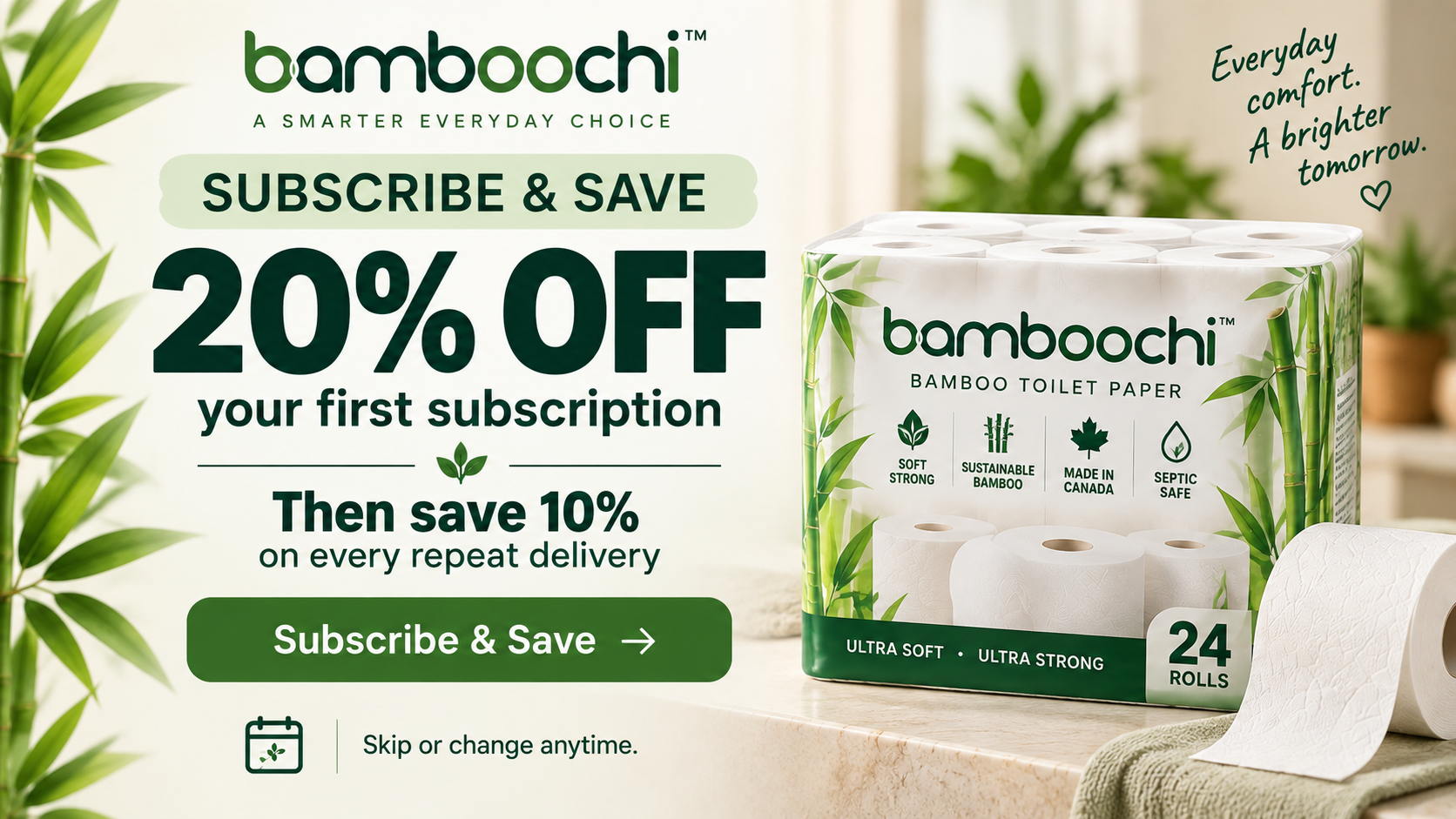
RV Toilet Paper
Made for Your
Holding Tanks
Fast-breaking bamboo toilet paper designed
specifically for RV holding tanks and septic
systems. Strong, soft, and made in Canada
to help reduce clogs and tank buildup.
4.8/5 from 3,000+ RV owners

Made in Canada
Proudly made in Canada with high standards you can trust.

Fast-Breaking Bamboo Fibers
Breaks down quickly to help reduce clogs and buildup.

Designed for RV Holding Tanks
Works with low-water systems and narrow pipes.

Soft & Strong
Comfortable for everyday use without sacrificing performance.
 Free Shipping Across Canada
Delivered fast and reliably to your door.
Shop Septic Safe Bamboo Toilet Paper
Why Septic Owners Choose Bamboochi
Helps Reduce Tank Buildup
Fast-breaking fibers break down quickly to help prevent clogs and sensor issues.
Strong for Everyday Use
3-ply strength that holds up, while still breaking down efficiently in RV tanks.

Designed for Low-Water Systems
Ideal for RVs where water is limited and every flush counts.
Proudly Made in Canada
Manufactured in Canada using premium bamboo and high quality standards.
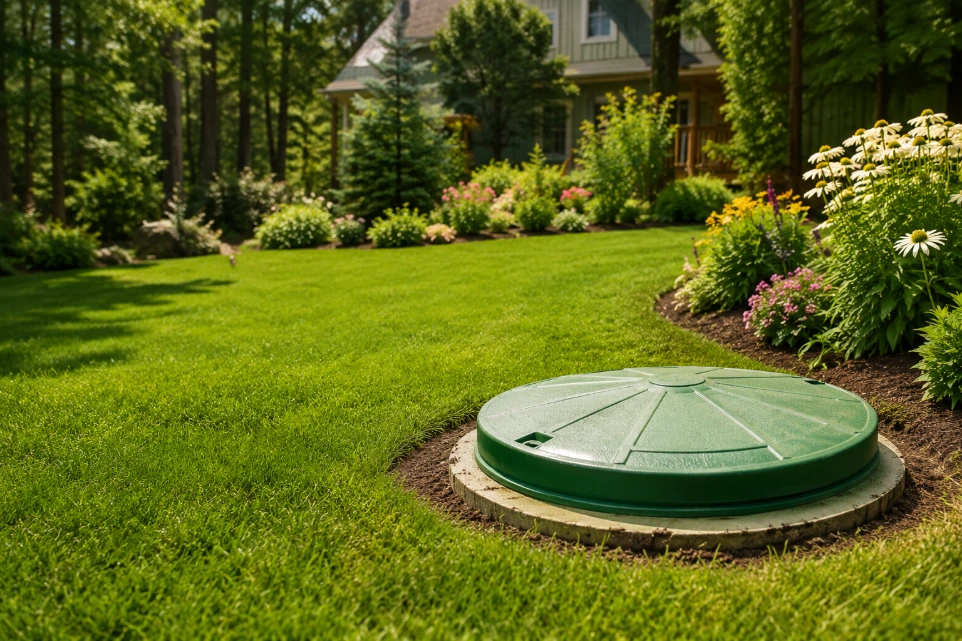
How Septic Systems Work
septic safe toilet breaks down fast so your system can do its job.

1.Flush
Waste and paper go into the holding tank.

2.Break Down
Fast-breaking bamboo fibers separate quickly to prevent buildup and clogs.

3.Natural Separation
Solid waste settles, liquids remain, paper begins to break down.
4.Healthy System
Fully broken down waste flows out easily when the tank is emptied

5.Peace of Mind
Fully broken down waste flows out easily when the tank is emptied
Bamboochi vs. Typical Household Toilet Paper
Not all toilet paper is
septic safe.
Here's how we compare.
|
Features |
Bamboochi |
Typical Household TP |
|
|
|
|
|
|
|
|
|
|
|
|
|
|
|
|
|
|
|
|
|
|
|
 Designed for septic systems


 Fast-breaking bamboo fibers
 Septic-safe design
 Soft & comfortable
 Made in Canada
 Helps reduce clogs & buildup
Why Septic Owners Trust Bamboochi
4.8/5 from 3,000+ customers
"Finally a toilet paper that actually breaks down in our RV tank. No more clogs!"
"Perfect for our travels. Soft, strong, and septic-safe. We love it!"
"Great quality and made in Canada We wont't use anything else in our RV."
Frequently Asked Questions
Bamboo fiber is typically sourced internationally, but the final product is often manufactured, converted, and packaged in Canada. Canadian manufacturers combine globally sourced materials with local production processes to deliver consistent quality and performance.
Toilet paper is manufactured globally, including in Canada, the United States, and other regions. Production location depends on the brand and its supply chain.
A portion of toilet paper sold in Canada involves imported materials or production. Many products combine global sourcing with local processing or distribution.
Some products are fully manufactured in Canada, while others are partially produced or imported. The level of domestic production varies by brand. Bamboochi is made in Canada.

Peace of Mind Starts at Home
Make the smart choice for your home and your septic system.
Free Shipping
Across Canada

30-Day Satisfaction
Guarantee

Secure Checkout
Safe & Encrypted

Proudly Canadian
Made in Canada
Septic Safe Toilet Paper
Introduction
When people search for septic safe toilet paper, they are usually trying to avoid one thing: problems they can’t see until it’s too late.
Septic systems work quietly in the background, but when something goes wrong, the results are expensive, inconvenient, and often messy. Toilet paper may seem like a small detail, yet it is one of the most common items entering a septic tank every day. Choosing the wrong type can slowly stress a system over time, even if everything appears fine at first.
This page explains what septic safe toilet paper actually means, why it matters, and how to choose a product that works with your septic system instead of against it.
This is not a product comparison or a sales pitch. It’s a practical guide to help you make an informed decision.
Why Toilet Paper Choice Matters for Septic Systems
A septic system relies on a simple but delicate process.
Wastewater flows from your home into a septic tank, where solids settle and break down. Beneficial bacteria digest organic material, while liquids move on to the drain field for further filtration. Anything that does not break down easily can disrupt this process.
Toilet paper plays a larger role than most people realize because:
- It is used frequently
- It enters the system in concentrated amounts
- It directly affects how solids accumulate and break down
When toilet paper dissolves quickly, it separates and disperses before building up. When it does not, it can clump together, slow digestion, and increase the amount of solid waste sitting in the tank.
Over time, this can lead to:
- Slower drainage
- Increased pumping frequency
- Greater strain on pipes and baffles
This is why choosing toilet paper safe for septic tanks is not about comfort alone — it’s about long-term system health.
What Makes Toilet Paper Septic Safe
There is no single certification that guarantees a product will work well in every septic system. However, septic system safe toilet paper tends to share a few key characteristics.
Breakdown Speed
The most important factor is how quickly toilet paper breaks down in water.
Paper that disperses easily separates into smaller fibers before reaching the tank. This reduces the chance of clumping and allows bacteria to do their job more efficiently.
A simple at-home test is to place a few sheets in a jar of water and shake it gently. Septic tank safe toilet paper will begin to fall apart quickly rather than staying intact.
Thickness and Ply
Thicker is not always better for septic systems.
Multiple layers and heavily compressed sheets can take longer to separate. While ultra-soft products may feel better initially, they can be harder for septic systems to process.
Toilet paper septic safe options tend to balance comfort with lower density, allowing water to penetrate the paper more easily.
Fiber Material
The source of the paper fibers matters.
Some fibers break down faster than others, depending on how they are processed and bonded. Paper made with shorter, less chemically treated fibers generally disperses more readily in water.
This does not mean recycled or alternative fibers are automatically better — the key is how the fibers behave once flushed.
Additives and Treatments
Lotions, coatings, dyes, and fragrances can affect how toilet paper interacts with water and bacteria.
While additives may not cause immediate issues, they can leave residue or slow decomposition over time. Septic system safe toilet paper usually avoids heavy treatments that interfere with natural breakdown.
Think of this section as a checklist: faster breakdown, reasonable thickness, simple fibers, and minimal additives.
If you’re curious what actually happens after toilet paper enters a septic tank, we explain the full breakdown process step by step here.
What Happens When Toilet Paper Is NOT Septic Safe
Problems rarely appear overnight. Instead, they build gradually.
When toilet paper does not break down properly, several things can happen:
Clogs and Blockages
Undissolved paper can collect in pipes or around tank components, restricting flow.
Slow Drains and Backups
As buildup increases, wastewater moves more slowly, leading to gurgling drains or backups during heavy use.
Odors
Excess solids in the tank can interfere with bacterial balance, allowing odors to escape through drains or vents.
Increased Maintenance
More frequent pumping and service calls become necessary when solids accumulate faster than expected.
The cause-and-effect chain is simple: slower breakdown leads to buildup, buildup leads to stress, and stress leads to failure.
Choosing toilet paper safe for septic systems helps reduce these risks before they start.
Septic systems rely on settling, bacterial digestion, and drainage fields. If you want a clearer picture of how the system processes waste, this guide breaks it down visually.
Is Bamboo Toilet Paper Septic Safe?
Yes — bamboo toilet paper can be septic safe, when it is manufactured with breakdown in mind.
Bamboo fibers differ from traditional wood pulp in structure and processing. When properly produced, bamboo paper tends to separate efficiently in water rather than forming dense clumps.
That said, bamboo is not automatically safe by default. Just like any material, its performance depends on:
- Fiber processing
- Sheet density
- Additives used during manufacturing
When these factors are handled correctly, bamboo toilet paper functions well in septic systems and aligns with the same criteria outlined earlier: fast dispersion, manageable thickness, and minimal residue.
For readers interested in bamboo-based options, you can learn more on our Bamboo Toilet Paper product page, which explains material sourcing and performance considerations in detail.
Some factors that affect septic safety also overlap with sustainability, but they are not the same. This guide explains what actually makes toilet paper sustainable and what doesn’t
Septic Safe Toilet Paper for RVs and High-Risk Systems
Some systems are more sensitive than others.
RVs, tiny homes, older septic tanks, and systems with limited water volume have less margin for error. In these setups
RVs and mobile systems operate with smaller tanks and less water, which makes toilet paper choice even more important. If you’re choosing toilet paper specifically for an RV septic system, this guide focuses on those differences.