Direct Answer: What Separates Residential from Commercial Toilet Paper?
Residential toilet paper is made for the everyday needs of homes—balancing comfort, ease of use, septic-safe performance, and a touch of softness. Commercial toilet paper, on the other hand, is designed for high-traffic public spaces, prioritizing durability, cost-efficiency, and larger roll sizes. If you’re choosing toilet paper for your home, it’s important to understand these differences before you buy. The wrong choice can leave you frustrated or worse—dealing with plumbing headaches that are totally avoidable.
Why Does This Difference Matter for Canadian Households?
Switching to a new brand, especially one that promises sustainability, often comes with a little hesitation. People wonder: will this feel different? Will it hold up? Is it actually safe for my plumbing? These questions intensify if you’ve ever wondered whether you could save money with commercial rolls, or if commercial products are “tougher” or “more economical”. Let’s dig into how residential and commercial toilet papers truly perform—so you can make the right decision for your family.
Breaking Down the Core Differences
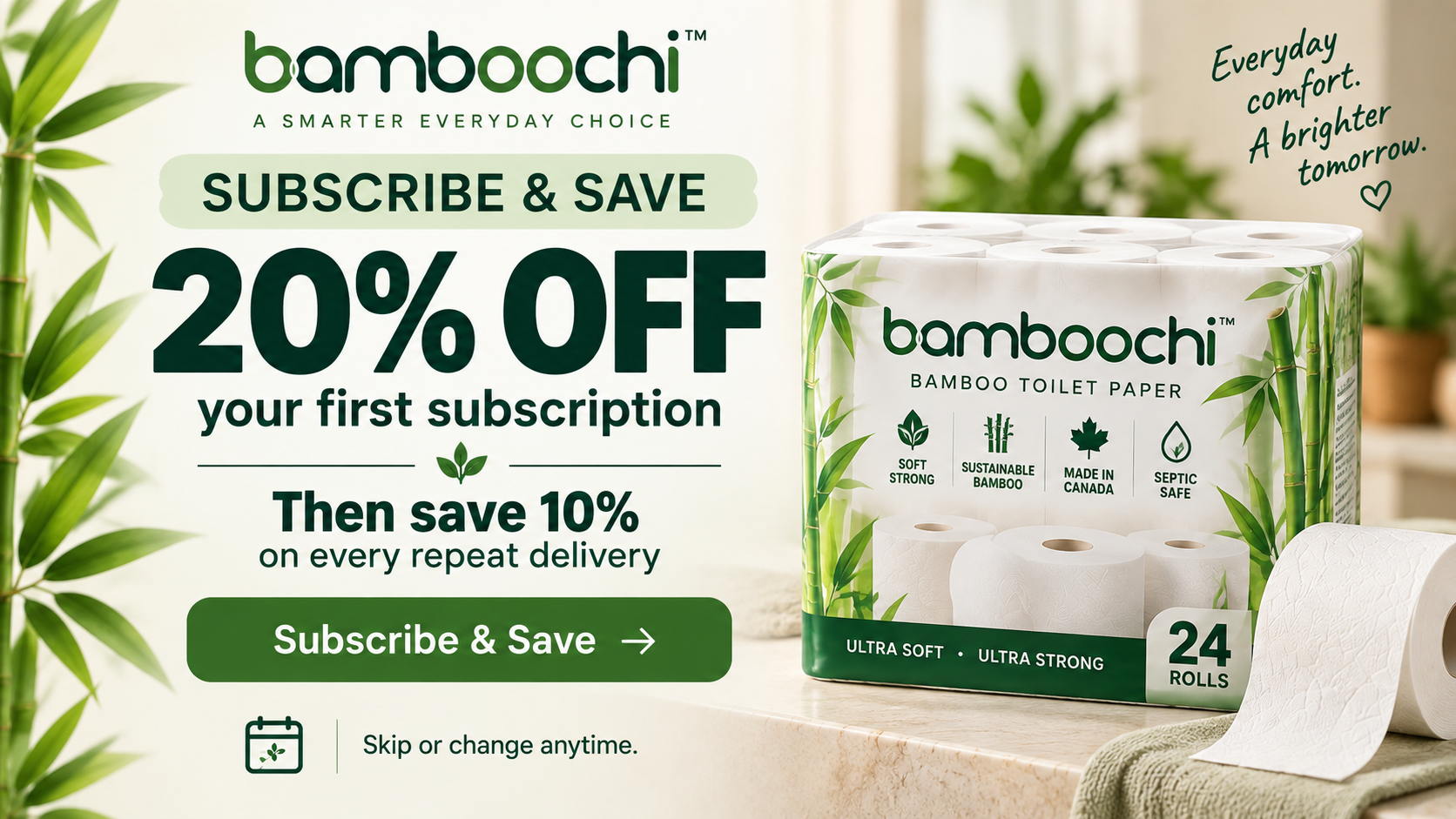
- Material: Residential rolls, especially sustainable options like Bamboochi bamboo toilet paper, are made for comfort and safe breakdown in household plumbing or septic systems. Commercial rolls, often made from virgin pulp or recycled fiber, focus on volume and cost, not user experience.
- Roll Size and Packaging: Commercial toilet paper typically comes in jumbo-sized rolls or smaller sheets on rolls that don’t fit standard home dispensers. Residential toilet paper fits conveniently into typical home fixtures.
- Sheet Thickness and Feel: At home, you probably want a soft yet reliable feel. Commercial paper is usually thinner, rougher, or single-ply—meant to last longer between changes, not to pamper.
- Breakdown Speed: Residential paper (especially bamboo) is engineered to dissolve easily for septic safety. Commercial paper may stick around longer, increasing the risk of clogs in home plumbing.
Real-World Scenarios: What Happens If You Mix Them Up?
- Scenario 1: “We switched to commercial rolls thinking it’d save money. Instead, we’re dealing with an overflowing roll holder and no end of complaints that it feels rough.” Large commercial rolls don’t fit well, and the paper itself often feels harsh to sensitive skin. Bulk cost savings quickly evaporate if people use more per visit just to get comfortable.
- Scenario 2: “Our home has a septic tank. We worry commercial paper might clog the system.” Commercial rolls are not always septic safe. Unlike bamboo-based options designed for residential plumbing, many commercial types break down slowly—or not at all—leading to potential build-ups and expensive fixes. For more detail on septic safety, visit our septic safe toilet paper guide.
- Scenario 3: “I’m renovating my guest bathroom. Should I switch to commercial paper for when we have more visitors?” Even with increased use, residential-specific products handle family traffic. Modern bamboo toilet paper, for example, holds up without sacrificing softness or sewer safety, making it a more reliable choice for guests too. Find out how bamboo stands up to busier households in our article: Can Bamboo Toilet Paper Handle High-Use Households?.
How to Decide: Decision Frameworks for Real Households
Framework 1: Think About Your Household’s True Needs
- If you value comfort and fast-dissolving paper (especially if you have children or sensitive skin), choose a residential-focused bamboo product like Bamboochi.
- If your main concern is the lowest cost per sheet—and you’re not worried about feel, roll fit, or breakdown—you might consider commercial paper. But, in most homes, the tradeoffs aren’t worth the small savings.
- If you have a septic system or older plumbing, prioritize a residential, septic-safe paper. Commercial options can increase the risk of expensive problems. For more, see bamboo toilet paper for older plumbing.
Framework 2: The Comfort–Performance–Compatibility Triangle
- Comfort: Residential bamboo toilet paper wins—soft yet strong, no harsh texture, safe for the whole family.
- Performance: Commercial paper shines only in high-traffic restrooms where efficiency matters more than feel. At home, performance is about dissolving, comfort, and reliability, which bamboo paper delivers.
- Compatibility: Residential products fit standard home fixtures, are safe for septic and sewer systems, and work the way Canadians expect toilet paper to work at home. Commercial rolls are designed for business-sized dispensers, which don’t work well in household bathrooms.
Common Misconceptions About Commercial Toilet Paper
- “It’s more cost-effective for home use.” Larger rolls might seem like a smart buy. But higher usage rates and fitting issues often cancel out cost savings.
- “It’s tougher, so it lasts longer.” Toughness can mean roughness—and more resistant to breaking down. Instead of lasting longer, people end up using more at home.
- “It’s fine for septic tanks.” Many commercial rolls are made to last through industrial plumbing systems, not home-grade pipes. Seek out paper specifically marked as septic safe; bamboo-based residential products are usually a safer bet. More on what happens in septic systems here.
- “Bamboo only matters for sustainability.” Bamboo paper isn’t just eco-forward; it performs better in home plumbing, is gentle on skin, and breaks down more easily—reducing practical headaches for families, not just carbon footprints. Learn about the benefits of bamboo toilet paper.
What Actually Affects the Results You Experience?
- Plumbing System Age and Design: Older or more sensitive systems require fast-dissolving, non-clogging toilet paper. Commercial sheets rarely fit the bill for residential septic or older pipes.
- User Habits: At home, people want comfort and may use extra rough paper to compensate, increasing usage and clog risk.
- Paper Material: Bamboo breaks down quickly, while commercial-grade pulp (especially recycled) can linger in pipes.
- Roll Compatibility: Commercial rolls often don’t fit standard holders. Struggling with oversized rolls is an ongoing nuisance.
FAQs: Residential vs Commercial Toilet Paper
1. Is it safe to use commercial toilet paper in a home with a septic system?
Most commercial toilet papers are not designed for residential septic systems. They often don’t dissolve as quickly as home-use brands, especially bamboo-based options. This can increase the risk of blockages and long-term septic problems.
2. Does commercial toilet paper save money for families?
Bulk rolls may seem less expensive per sheet, but higher usage rates and wasted paper often eliminate the savings. Plus, comfort and fit issues can lead to frustration and extra use.
3. Why does bamboo toilet paper perform better in homes?
Bamboo fibers break down rapidly in water, making them gentle on plumbing and septic systems. They’re also softer and less likely to irritate skin, making them an upgrade over most commercial papers, even before considering sustainability.
4. Can you use commercial rolls in standard residential dispensers?
Most commercial rolls are too large for home holders, leading to inconvenient fit and waste. Residential rolls are made to work seamlessly in the average bathroom.
5. What’s the best toilet paper for Canadian winters and high-use homes?
Look for a residential bamboo paper designed for regular home use—soft and septic safe. These hold up to family traffic and protect home plumbing during busy seasons. Bamboo toilet paper, especially from Canadian brands, stands out here.
6. Does softness really matter, or is that just marketing?
It matters. Comfort is the main reason most families avoid commercial rolls at home. Bamboo offers a balance of softness without chemicals, supporting both comfort and peace of mind. For more, see what actually makes toilet paper feel softer.
A Calm Path to Your Decision
If you’re picking toilet paper for your home, focus on what truly matters—comfort, septic safety, fit, and practicality. Bamboochi’s Canadian bamboo toilet paper is made for these realities, letting you avoid commercial roll headaches while supporting your values and your plumbing. There are no dramatic tradeoffs here—just steady comfort for everyday life.
If you’d like a more comfortable, septic-safe option for your home, shop Bamboochi bamboo toilet paper made in Canada. Make the switch with clarity, not compromise.Start writing here...