
RV septic systems are far more sensitive than residential systems. Smaller holding tanks, limited water flow, and frequent dumping mean that what you flush plays a bigger role than most RV owners expect.
One of the most common causes of rv septic problems toilet paper related issues is toilet paper that doesn’t break down fast enough.
This guide explains how toilet paper creates RV septic problems, what symptoms to watch for, and how to reduce issues without changing how you travel.
How RV Septic Systems Work
An RV septic system depends on fast breakdown inside a compact holding tank. Unlike home septic systems, RV tanks:
- Hold less water
- Rely on quick dispersion, not long settling
- Are emptied frequently
- Have limited time for bacteria to recover
Because of this, materials that stay intact too long tend to accumulate instead of breaking apart.
Toilet paper that works fine in a household bathroom can easily cause rv septic problems toilet paper related buildup in an RV system.
Why Toilet Paper Causes RV Septic Problems
The issue usually isn’t flushing toilet paper — it’s flushing the wrong toilet paper.
Slow-Breaking Fibers
Many toilet papers are designed to stay strong when wet. In an RV septic tank, that strength causes problems.
Paper that resists breakdown can:
- Clump together
- Trap waste
- Increase sludge buildup
- Interfere with tank sensors
Over time, this is one of the most common sources of recurring rv septic problems toilet paper related failures.
Excessive Ply and Density
Thicker toilet paper uses more material per flush. In an RV septic system, that means:
- More solids entering the tank
- Less water available to help separation
- Faster tank fill without proper breakdown
Even soft, “luxury” paper can contribute to RV septic issues when used consistently on the road.
Chemical Additives
Some toilet papers contain dyes, fragrances, or binders that slow natural decomposition. These additives can interfere with the bacteria responsible for breaking down waste, increasing the likelihood of RV septic problems over time.
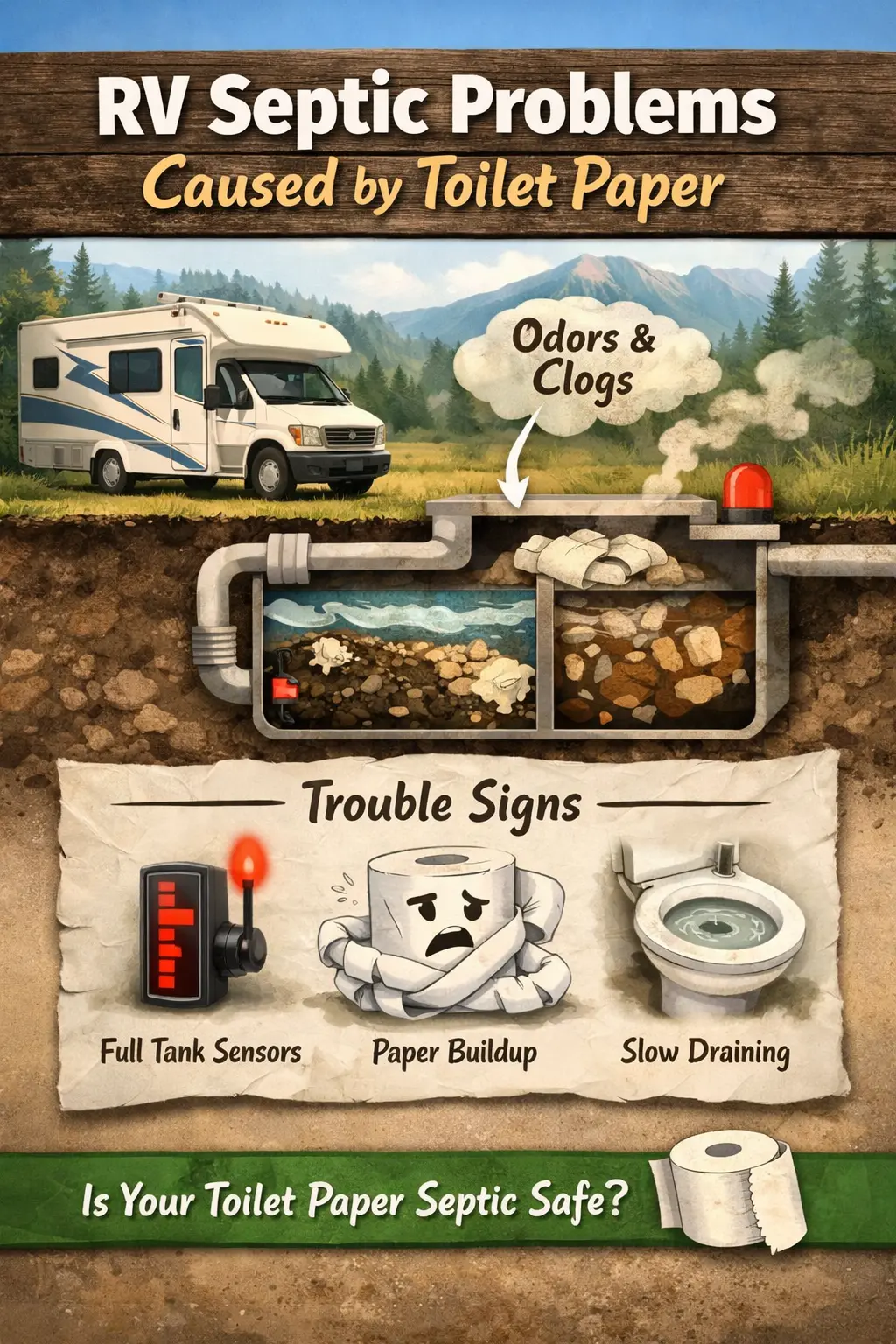
Signs Toilet Paper Is Causing RV Septic Issues
Common warning signs that rv septic problems toilet paper related issues are developing include:
- Tank sensors showing full too quickly
- Odors that remain after dumping
- Slow drainage
- Visible paper residue when emptying
- Repeat clogs despite routine maintenance
When these symptoms keep returning, toilet paper is often the underlying cause.
Why “Septic Safe” Isn’t Always Enough
Many products labeled “septic safe” are tested for residential systems, not RV holding tanks.
RV systems operate under tighter constraints. Understanding what makes toilet paper truly septic safe helps explain why some products still cause RV septic problems even when they carry a septic-safe label.
You can learn more about how paper behaves in septic environments on the septic safe toilet paper page:
Toilet Paper That Works Better for RV Septic Systems
To reduce RV septic problems, toilet paper should:
- Break apart quickly in water
- Use shorter, natural fibers
- Avoid chemical binders
- Disperse instead of clumping
Paper designed specifically for RV holding tanks is engineered with these limitations in mind. The rv septic tank bamboo toilet paper page explains how fast-breaking paper performs differently inside RV systems:
👉 rv septic tank bamboo toilet paper
Reducing RV Septic Problems Without Changing Habits
Most RV septic problems caused by toilet paper don’t require using less paper or altering your routine. Switching to toilet paper that breaks down efficiently allows waste to separate naturally and keeps the system functioning as intended.
This helps prevent buildup, improves dumping efficiency, and reduces long-term maintenance issues.
Final Takeaway
RV septic problems caused by toilet paper are rarely about quantity — they’re about composition and breakdown speed.
Choosing toilet paper that works with RV septic systems instead of against them helps prevent clogs, odors, and repeated tank issues.
If you want to explore RV-compatible options designed for sensitive septic systems, you can view them here:
👉 shop