Most Canadian homeowners with septic systems know to avoid flushing anything “non-flushable,” but the impact of daily toilet paper choices often isn’t as clear. While using the “wrong” toilet paper rarely causes an instant disaster, the long-term consequences can quietly build—potentially leading to expensive clogs, costly pump-outs, and even system failures down the road. If you’ve wondered whether your toilet paper habits could hurt your septic tank, you’re not alone. Let’s break down the practical implications, bust some common myths, and help you confidently choose a safer path forward for your household, wallet, and the environment.
Direct Answer: Yes—The Wrong Toilet Paper Can Harm Your Septic System Over Time
Repeated use of toilet papers that don’t dissolve easily—or that contain certain additives—gradually interferes with septic function. Instead of breaking down, non-septic-safe paper can accumulate in your tank, slowing decomposition and increasing sludge. Over months and years, this buildup can clog pipes, reduce drainage, force early pump-outs, and even contribute to system backup or failure. The risk isn’t immediate, but it quietly grows with every flush that adds the wrong material to your septic setup.
How Chronic Septic Strain Happens: A Practical View
Your septic system relies on a balance of bacteria and decomposition. Properly designed toilet paper dissolves quickly so those bacteria can work unimpeded. Some mainstream toilet papers, however, are:
- Very slow to break down (extra thick, ultra-soft, multi-ply)
- Made with additives such as lotions, fragrances, or tough synthetic fibers
- Heavily bleached, which may affect tank bacteria
When these papers enter your tank, they may not fully dissolve before the next pump-out. The immediate result is minor—a bit more residue, maybe mild clogging. Over time though, these “unseen” buildups layer into:
- Reduced tank space: More solid matter leads to less water volume, increasing the frequency and cost of pump-outs.
- Clogged outflow pipes: Undissolved paper can escape the tank and block the drain field, leading to slow drains and foul odours.
- Bacterial disruption: Some chemicals or fibers may interfere with essential septic bacteria, reducing breakdown efficiency.
Decision Framework 1: Does Your Toilet Paper Support Tank Health?
- If: Your toilet paper is labelled “septic safe,” unbleached, fragrance-free, and dissolves easily → Low long-term risk.
- If: You notice leftover paper in your tank after pump-outs, or frequent slow drains → Consider switching paper brands.
- If: Multiple household members use copious amounts of thick, multi-ply, or scented paper daily → Long-term buildup risk increases significantly.
This framework ties paper choice to actual outcome. Even with “septic safe” claims, performance differs. What you see during pump-outs, maintenance, and daily usage offers the best reality check.
Real-World Scenario 1: The Slow-Growing Issue
Imagine a busy family in Nova Scotia using a popular ultra-soft national brand (marketed as a comfort upgrade). At first, there are no noticeable problems. Two years later, after a routine pump-out, the technician finds a thick layer of barely-broken-down paper. The outflow is slow and the tank requires service twice as often as before. The cause? That comfort paper takes too long to dissolve—leading to a cumulative headache and $1,000+ in extra maintenance over five years.
Real-World Scenario 2: Additive Effects
A rural Ontario couple chooses scented, lotion-infused toilet paper for guest bathrooms. Periodically, they notice a faint sour smell from the backyard and ever-slowing sinks. After investigation, it becomes clear that synthetic additives in the toilet paper (and not “what’s being flushed” otherwise) partially clogged the drain field, weakening the system’s natural processes.
Real-World Scenario 3: Why “Flushable” Isn’t Always Safe
Many products claim to be “flushable”—especially wipes and some novelty papers. But in real-world Canadian septic systems, these often resist breakdown, collecting at the bottom of the tank or snagging pipes. One Alberta homeowner swapped from regular toilet paper to wipes and high-cushion, highly-bleached paper. After 18 months, their septic installer found heavy residue in both the tank and outflow, leading to expensive repairs. In reality, “flushable” doesn’t always mean “safe for long-term septic health.”
What Actually Affects Long-Term Septic Performance?
- Breakdown Speed: The faster your toilet paper dissolves, the less it impacts septic bacteria and plumbing.
- Ingredients: Fragrances, lotions, or harsh bleaches can inhibit microbes responsible for decomposition.
- Amount Used: Larger households, or anyone using more paper per flush, increase the load on the septic system.
- Ply and Thickness: Thicker multi-ply papers take longer to dissolve and are more likely to accumulate.
- Pumping Frequency: Even the best paper adds waste; regular maintenance is still necessary, but the right choice extends intervals.
These aren’t all-or-nothing factors. For example, if your household uses single-ply, unscented, bamboo-based toilet paper and doesn’t flush other products, the system is less stressed. On the other hand, any pattern of long-term use of tough, poorly-dissolving paper increases risk in practical, measurable ways.
Common Misconceptions about Toilet Paper and Septic Systems
- “All toilet paper is safe for septic tanks.” Not true—many popular brands are engineered for comfort, not breakdown, and don’t prioritize septic safety.
- “A system that works fine now is healthy for life.” Hidden buildup is rarely visible until problems surface months or years later.
- “Flushable” = safe. No Canadian plumbing standard certifies “flushable” claims; breakdown in water and breakdown in a septic tank are not the same thing.
- Bamboo or recycled always equals “delicate.” Not all eco-papers are equal—look for third-party “septic-safe” confirmation, and know that manufacturing processes differ.
Decision Framework 2: How to Choose Safer Toilet Paper For Septic Longevity
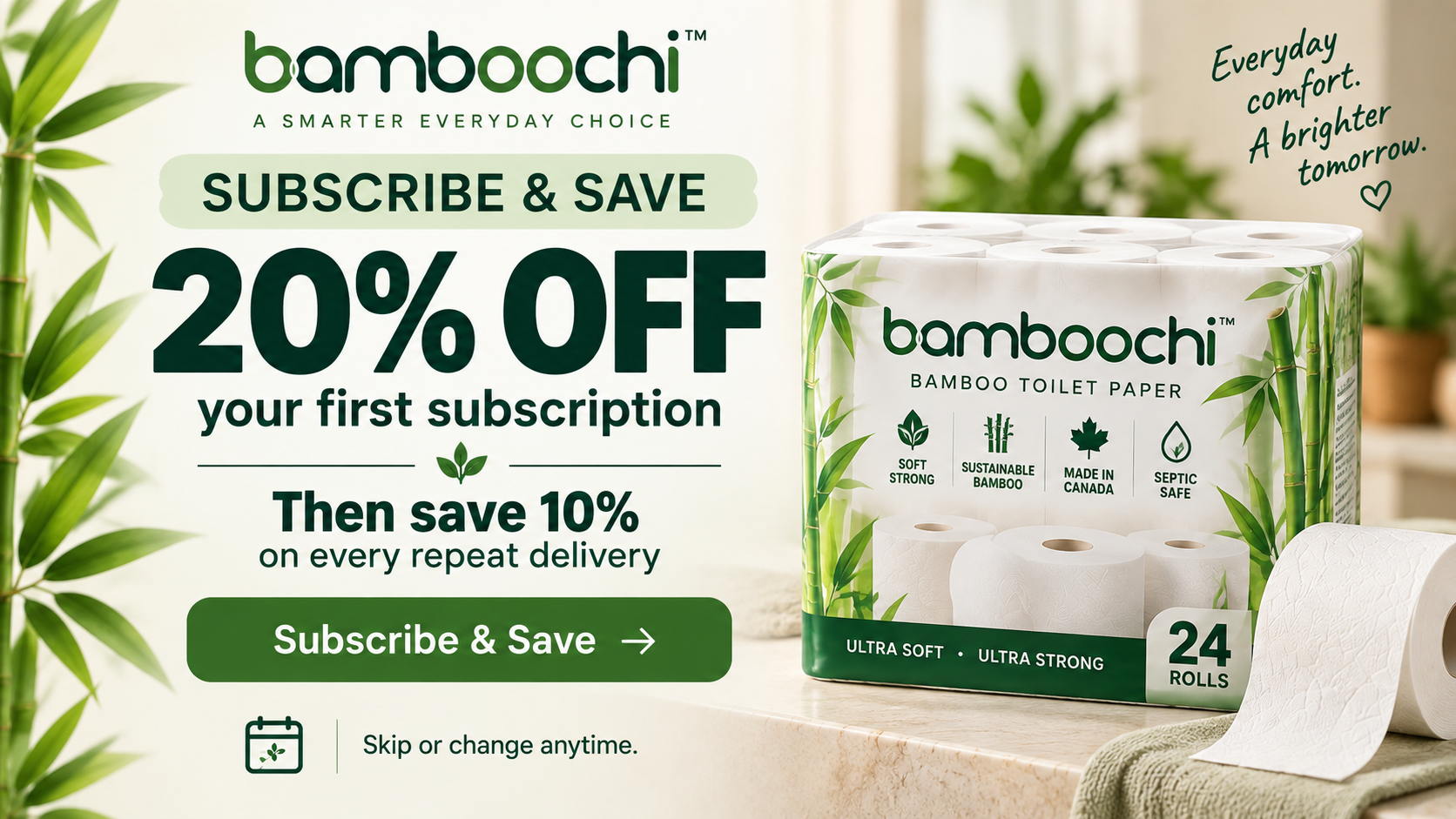
- Check for rapid dissolvability—Look for brands that pass the “swirl test”: Drop a square in a jar of water, stir a few times, and check after 30 seconds. Good paper will noticeably break apart. Bamboochi, for example, is engineered for quick dissolution.
- Limit additives—Choose unscented, dye-free, lotion-free products (these interfere less with beneficial bacteria).
- Consider your septic workload—Larger or high-use households benefit from stricter paper choices and regular checks/maintenance.
- Support Canadian-made, sustainable options—This shortens supply chains and typically means the product’s ingredients and impact are easier to verify.
FAQs
Does bamboo toilet paper reduce septic maintenance costs?
Bamboo toilet paper dissolves faster than many wood-pulp varieties, reducing leftover residue and risk of clogs. Households using Bamboochi bamboo toilet paper often notice fewer slow drains and more predictable maintenance timelines. The savings show up not in magic solutions, but in preventing avoidable buildup between pump-outs.
How can I tell if my toilet paper is harming my septic tank?
Look for signs like frequent slow drains, foul odours in your yard, or noticing significant paper buildup during a septic service visit. Home “swirl tests” (as described above) give quick clues about breakdown speed.
Can I keep using my favourite fluffy brand if I have a septic tank?
It’s possible, but not risk-free. The more a paper resists dissolving, the higher your long-term risk for issues. If you’ve had no problems after several years of use and keep up with pump-outs, you may be fine. If you start noticing clogging or more frequent maintenance, consider switching to a septic-focused option.
Are recycled or bamboo papers always better for septic systems?
Usually, but not automatically. Most bamboo and recycled toilet papers are engineered for quicker breakdown. Just check for “septic safe” claims, avoid added lotions or scents, and do a simple jar test if in doubt.
Should I flush less toilet paper to extend my tank’s life?
Using less always helps, but comfort matters, too. The right paper (dissolves quickly, minimal additives) makes sensible everyday use safe for your tank—without forcing your family to compromise on comfort or cleanliness.
Final Takeaway: Long-Term Thinking Pays Off
Septic trouble isn’t about single mistakes; it’s about daily, long-term habits that either support or strain your system. Choosing a toilet paper that genuinely dissolves, avoids disruptive additives, and matches your household’s reality is a quiet but effective way to protect your septic investment for years to come.
If your household values sustainability, Canadian-made goods, and plumbing peace-of-mind, shop Bamboochi bamboo toilet paper made in Canada. It’s an easy, low-stress choice for septic-friendly living—no lectures, just practical peace of mind.Start writing here...