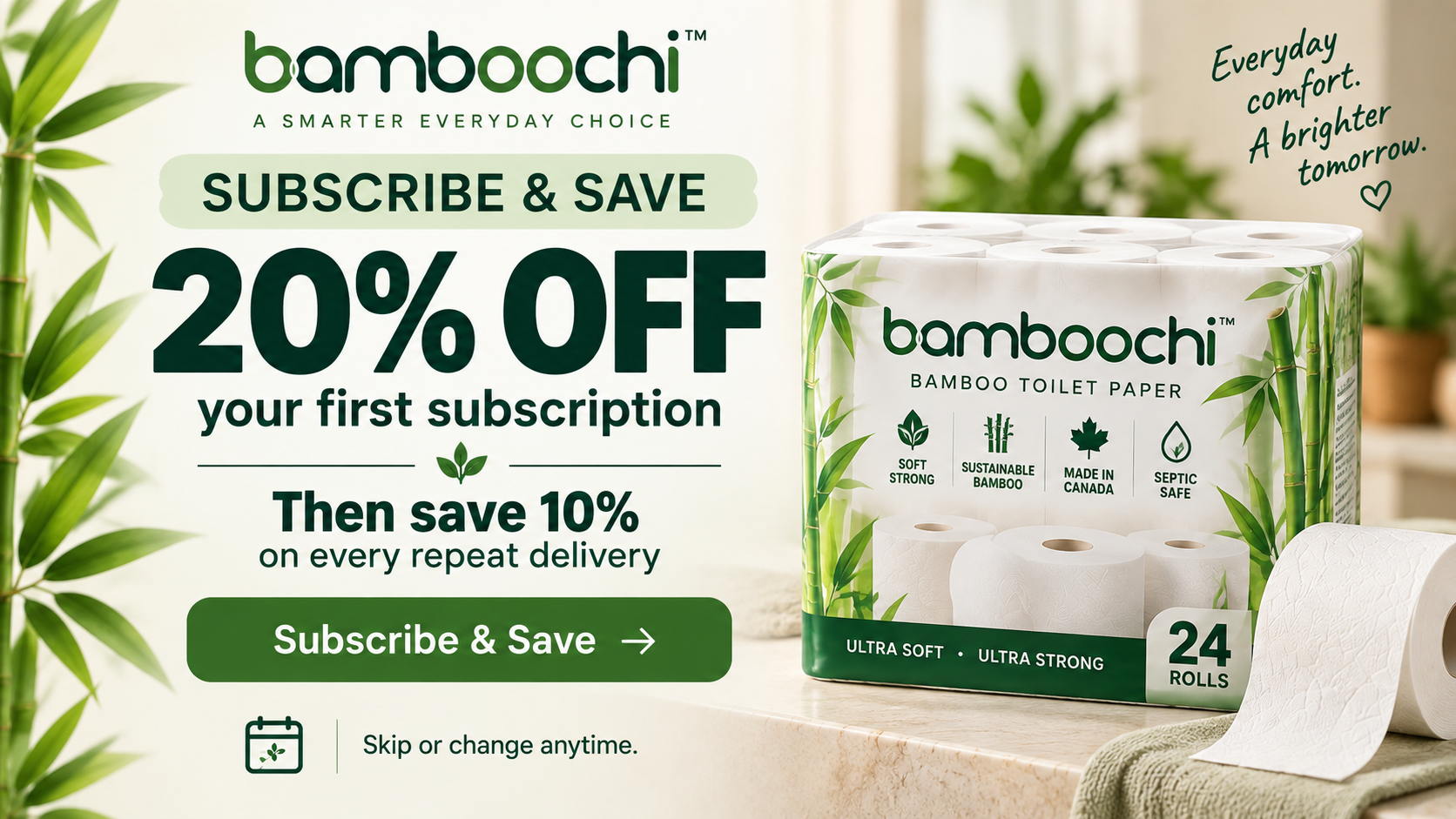
When you first try eco-friendly toilet paper, whether it’s made from bamboo, recycled paper, or another sustainable material, you might notice it feels different from the big national brands on store shelves. This isn’t your imagination—and it isn’t a flaw. Understanding why these differences exist helps demystify your experience and gives you confidence in choosing the right option for your home, your comfort, and your values.
The Quick Answer: It’s About What’s Left In—And What’s Left Out
Eco toilet paper often feels different because it skips certain chemicals, bleaching techniques, and softness tricks commonly used by giant manufacturers. Instead, it relies on cleaner production methods and alternative fibres—like bamboo—to deliver what your home needs most: comfort, reliability, and genuine sustainability. So, while the texture and performance can feel different, that difference is usually a direct result of meaningful choices around your health, the planet, and how well it works in real-world bathrooms.
How Big Brands Actually Achieve That Familiar Feel
Mainstream toilet paper brands have spent decades optimizing for softness and strength, using wood pulp (typically from trees like spruce, pine, or eucalyptus). Here’s what they commonly add to get that “standard” feel:
- Bleaching agents for a bright-white look
- Chemicals for texture—including lotions and softening agents
- Fibre mixes designed for fluffiness, not just function
- Multi-ply construction to boost absorbency and reduce tearing
All these steps result in a quilted, pillowy product most of us grew up with. The tradeoff? These choices often increase environmental footprint, introduce unnecessary ingredients, and can even cause issues for sensitive plumbing or septic systems.
What’s Different About Eco Toilet Paper?
Eco toilet paper—like Bamboochi bamboo toilet paper—starts with a different goal. Here’s how it stands apart:
- Clean fibres: Bamboo and recycled fibres are naturally strong. Less chemical processing is needed to hold the sheet together.
- Minimal whitening: Most eco options avoid chlorine-based bleaches. Slightly off-white or cream tones are common and totally normal.
- Softness without additives: You’ll rarely see lotions, fragrances, or artificial silkiness in eco rolls. This is better for sensitive skin and fewer allergies.
- Single or double ply only: Eco brands focus on minimizing resource use. The paper may feel lighter or less fluffy—but remains reliable in use and quick to break down.
So, the subtle changes in texture, colour, and thickness are all signs of what’s not included—and that’s entirely intentional.
Common Misconceptions About Eco Toilet Paper
- “It must be rough or scratchy.” Bamboo and recycled paper can be surprisingly soft—just a different texture than heavily processed brands. Many people find the transition easy after a week or two.
- “Eco rolls always clog toilets.” In reality, eco rolls (especially bamboo) often dissolve faster than traditional paper, reducing risks for septic tanks and older pipes. For septic-specific details, see our guide to septic-safe toilet paper.
- “You need to use twice as much to get clean.” Most eco options offer similar, if not better, absorbency per sheet. Less artificial fluff often means less wasted fibre and more efficient cleaning.
- “Bamboo is just greenwashing.” Not all “eco” papers are equal, but rigorous certifications and transparent sourcing—like Bamboochi’s—stand apart from brands using “eco” as a buzzword.
What Affects How Eco Toilet Paper Feels and Performs?
Not all eco toilet paper is created equal. Here’s what can change your experience, and how to make decisions that match your household’s needs:
- Fibre type: Bamboo delivers strength with a naturally smooth finish, while recycled papers may have a slightly firmer texture but offer superb breakdown.
- Ply count: More plies mean more thickness and softness, but can slow down breakdown in septic systems. Single-ply is often fine for most households; double-ply adds plushness for those who want it.
- Sheet size and density: Some eco rolls have slightly smaller sheets or less “loft.” Don’t be surprised if you notice the difference—this reduces waste and packaging but still gets the job done.
- Water-based production: Eco brands often skip oil-based or harsh processing, which you’ll notice in the gentler scent (or lack thereof) and cleaner touch.
- Local climate and plumbing: In Canada’s varied conditions, softer water can help eco paper break down even faster, while drier air can affect the feel of exposed rolls over time.
Two Practical Decision Frameworks
1. The Comfort–Sustainability Spectrum
If you:
- Prioritize familiar, ultra-soft texture over everything → Big-name, multi-ply paper may feel most comfortable (but with an environmental tradeoff).
- Want a balance between comfort and a lighter footprint → Bamboo-based two-ply products (like Bamboochi) often hit the sweet spot.
- Put breakdown speed and minimal impact first → Single-ply recycled paper might be your best fit—especially for sensitive septic systems.
2. “Real Bathroom, Real Life” Scenarios
- Family with young kids: Messes are frequent. You’ll value paper that’s soft enough for skin, strong enough for accidents, and minimizes leftover lint. Bamboo-based eco rolls are a good match here.
- Older home with delicate plumbing: Flush-friendly, fast-dissolving paper is crucial. Lighter eco rolls (like single-ply bamboo) help avoid blockages while staying gentle.
- Two-adult eco-conscious household: If you want to reduce landfill and avoid synthetic additives, switching to an unbleached or lightly processed bamboo roll is the simplest change—especially if you compost.
FAQs About How Eco Toilet Paper Feels (and Works)
Does eco toilet paper dissolve as well as big brands?
Yes, and sometimes better. Bamboo and recycled papers are engineered to break down efficiently, saving plumbing and septic systems from clogs. To see a full breakdown, check our septic system article.
Why isn’t eco toilet paper bright white?
The absence of chlorine bleach keeps the fibres closer to their natural colour. This doesn’t affect hygiene or softness and avoids introducing unnecessary chemicals to your home environment.
Is bamboo toilet paper really as soft as the big brands?
It’s a different kind of softness—silky rather than plush. Many users prefer the clean, residue-free feel after a short adjustment period.
Can I safely use eco toilet paper with my septic or composting system?
Absolutely. Eco papers, especially bamboo, dissolve rapidly and are widely recommended by plumbers for homes with septic or low-flow plumbing. For composting toilets, choose unscented, unbleached varieties.
Will I go through a roll much faster?
Roll life depends more on sheet perforation and ply number than on the eco factor alone. Many households find usage balances out after the first few weeks.
Are all “eco-friendly” toilet papers the same?
No. Look for transparent labelling and certifications. Products made in Canada, like Bamboochi, can offer local quality assurance and lower impact from shipping.
What to Do Next
If you’re looking for a more sustainable toilet paper that works for your household—and you’re open to a slightly different feel that puts real comfort ahead of chemicals—consider making the switch. Small changes like this make a genuine difference for your home, wallet, and the planet you’re passing on.
Ready to experience a change you can actually stand behind? Shop Bamboochi bamboo toilet paper made in Canada.
Start writing here...